


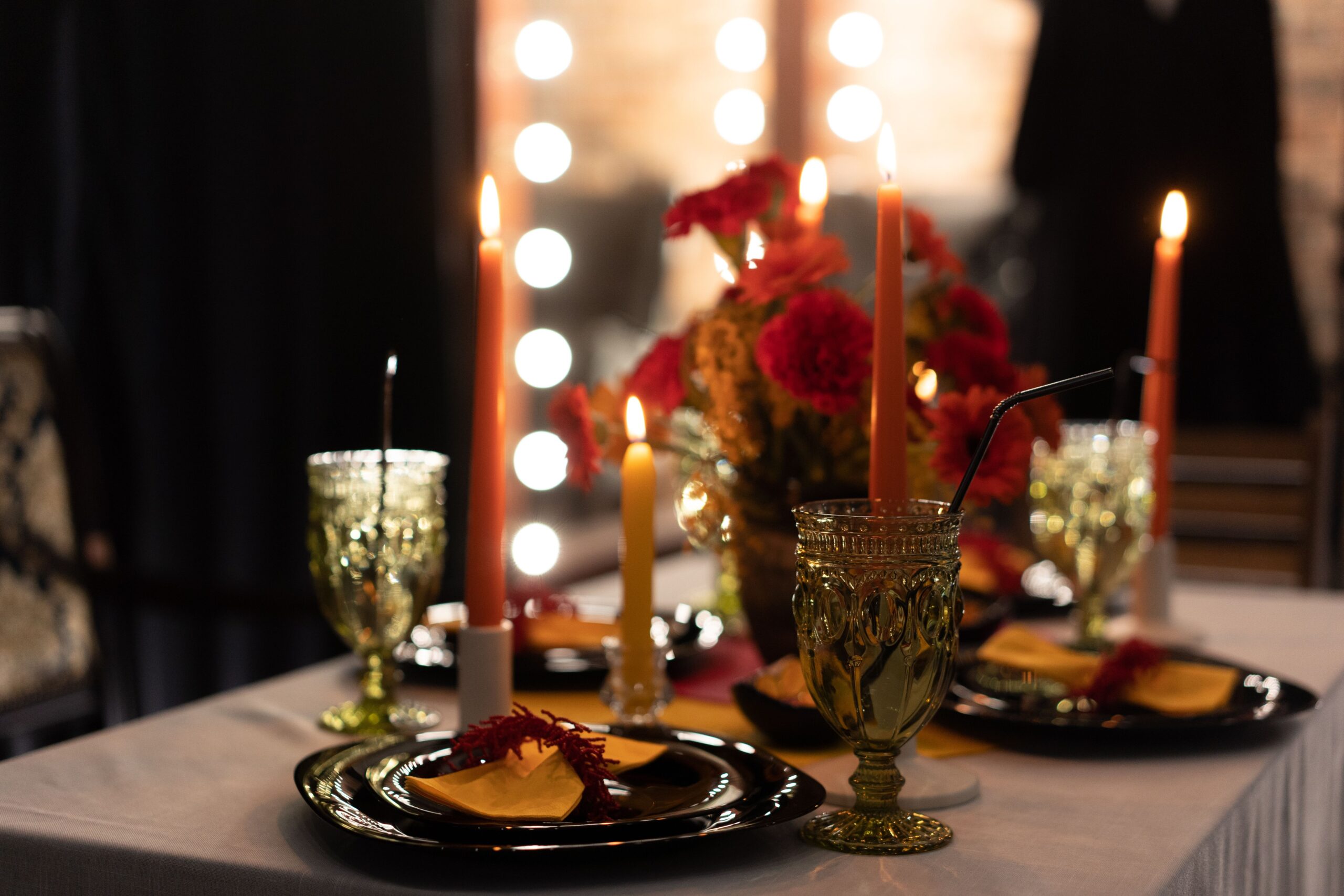
Cozy Harvest, Haunted Romantic or Midnight Glamour — choose your version of spooky season.
Halloween décor has a branding problem. The choice often looks like this: fill your home with orange plastic, or pretend October is not happening. There is a third option — one that keeps the fun but edits the palette, materials and scale.
The easiest way to avoid a house that looks accidentally themed is to choose a single Halloween personality and commit to it lightly. Below are three versions that work especially well in grown-up interiors: Cozy Harvest, Haunted Romantic and Midnight Glamour. None requires changing the entire room. All give you enough visual identity for very good Pinterest images.
1. Cozy Harvest: for people who do not actually want “Halloween décor”
This is the softest option: dried branches, pears, dark baskets, amber glass, beeswax candles and a restrained pumpkin or two. The palette is tobacco brown, oat, moss and muted orange. Think late October countryside rather than pumpkin patch gift shop.
The trick is to use real materials. A small pile of apples on a stoneware plate looks better than a ceramic sign announcing FALL. One heirloom pumpkin on a console can be enough if the rest of the room already has texture.
The Cozy Harvest formula
One natural pumpkin or gourd
One branch or dried botanical moment
Amber or brown glass
Beeswax or cream taper candles
A wool or brushed-cotton textile
No novelty typography
2. Haunted Romantic: for the candle-and-old-books person
This is the most atmospheric version. Start with things you might already own: candlesticks, old books, dark red flowers, lace or linen, antique-looking frames and a bowl of deep-colored fruit. Then add exactly one explicitly spooky detail — a black ribbon, tiny skull, raven illustration or vintage ghost print.
The “one obvious thing” rule keeps the room from turning into a set. If everything is spooky, nothing is stylish. If one thing is spooky, the ordinary objects around it suddenly become part of the story.
The Haunted Romantic palette
Oxblood, black, aged brass, parchment, plum and bone. Use warm candlelight so the darker tones feel rich rather than flat.
3. Midnight Glamour: for the dinner-party house
Midnight Glamour treats Halloween more like New Year’s Eve with a darker dress code. Black glass, smoked crystal, silver, glossy lacquer and white flowers create the base. Add a mirrored tray, small silver bowl or sculptural candleholder for shine.
This is the best style if your home is modern, monochrome or Art Deco-leaning. It also transitions easily into an actual Halloween dinner party because the décor already lives on the table.
The Midnight Glamour formula
Black or smoked glass
Silver or chrome accents
White flowers or branches
High-shine candlelight
One sculptural pumpkin in black, stone or metal
A very dark table linen or ribbon detail
Halloween looks most elegant when the house still looks like your house — just with a better soundtrack and lower lighting.
The five things that make Halloween décor look cheaper than it needs to
- Too many small themed objects scattered across every surface.
- Mixing several unrelated orange tones with black and purple by default.
- Using every Halloween symbol at once: bats + ghosts + skeletons + pumpkins + webs.
- Ignoring lighting — the easiest route to atmosphere.
- Novelty signs and slogans becoming the main visual element.
Where to decorate for maximum effect
If you want impact without buying much, focus on three zones: the entry, the coffee or dining table, and one shelf or mantel. Those are the places guests see and photographs capture. Leave the rest of the house alone.
A ribbon on the front-door wreath, darker taper candles on the table and a single edited shelf can create more atmosphere than twenty distributed decorations.
Which one should you choose?
Choose Cozy Harvest if you want the house to feel seasonal through Thanksgiving. Choose Haunted Romantic if your saved folder is full of old libraries, Practical Magic interiors and candlelit dinners. Choose Midnight Glamour if you prefer clean lines, black tailoring and a little Art Deco polish.
Or borrow one move from each: natural branches, oxblood flowers and black glass can live together beautifully. The point is not to obey an aesthetic. It is to give yourself a filter, so every new object has to pass the same question: does this belong in the room I am trying to make?