

Books, objects, photographs and souvenirs are back. Here is how to layer them without losing the room.
Minimalism had a very good run. Unfortunately, many of us interpreted it as “hide everything you like.” The pendulum is moving back toward rooms with books, objects, photographs, travel finds and evidence of a real person — but there is a difference between a collected room and a crowded one.
That difference is editing. “Curated clutter” works because the room contains more personality but still has rhythm, hierarchy and empty space.
Rule 1: Give every collection a border
Objects look calmer when the eye can understand where a grouping starts and ends. A tray, shelf, stack of books or single tabletop creates a visual border. Without one, small things spread until the entire room becomes one collection.
This is especially useful for perfume, candles, matchbooks, jewelry, tiny ceramics and travel finds. Put the small items together, and suddenly they read as deliberate rather than left out.
Rule 2: Vary height, repeat material
The easiest styling mistake is lining up objects at the same height. The second easiest is choosing every object from a different visual universe. Solve both at once: vary the silhouettes but repeat one or two materials.
For example, a low stack of books, a tall brass candlestick and an irregular ceramic bowl have different heights; brass may repeat in the frame beside them, while cream ceramic repeats elsewhere on the shelf. The eye finds enough connection to relax.
Rule 3: Leave one area conspicuously empty
Empty space is what makes a collection look expensive. It is the same reason jewelry is displayed on velvet with inches of breathing room around it. On a shelf, leave one section nearly bare. On a console, resist the urge to fill both ends.
If you are nervous the room looks unfinished, take a photo. A camera is excellent at revealing when “cozy” has crossed into “busy.”
Rule 4: Mix personal with beautiful
A room styled entirely with decorative objects can feel like a showroom. A room styled entirely with sentimental objects can feel visually chaotic. The sweet spot is the mix: a framed photo beside a sculptural vase; a souvenir bowl on top of a beautiful book; your grandmother’s candlestick next to a modern lamp.
The personal object gives the beautiful object a story. The beautiful object gives the personal one context.
Collected does not mean “more.” It means the room contains evidence of choices made over time.
Rule 5: Use books as architecture
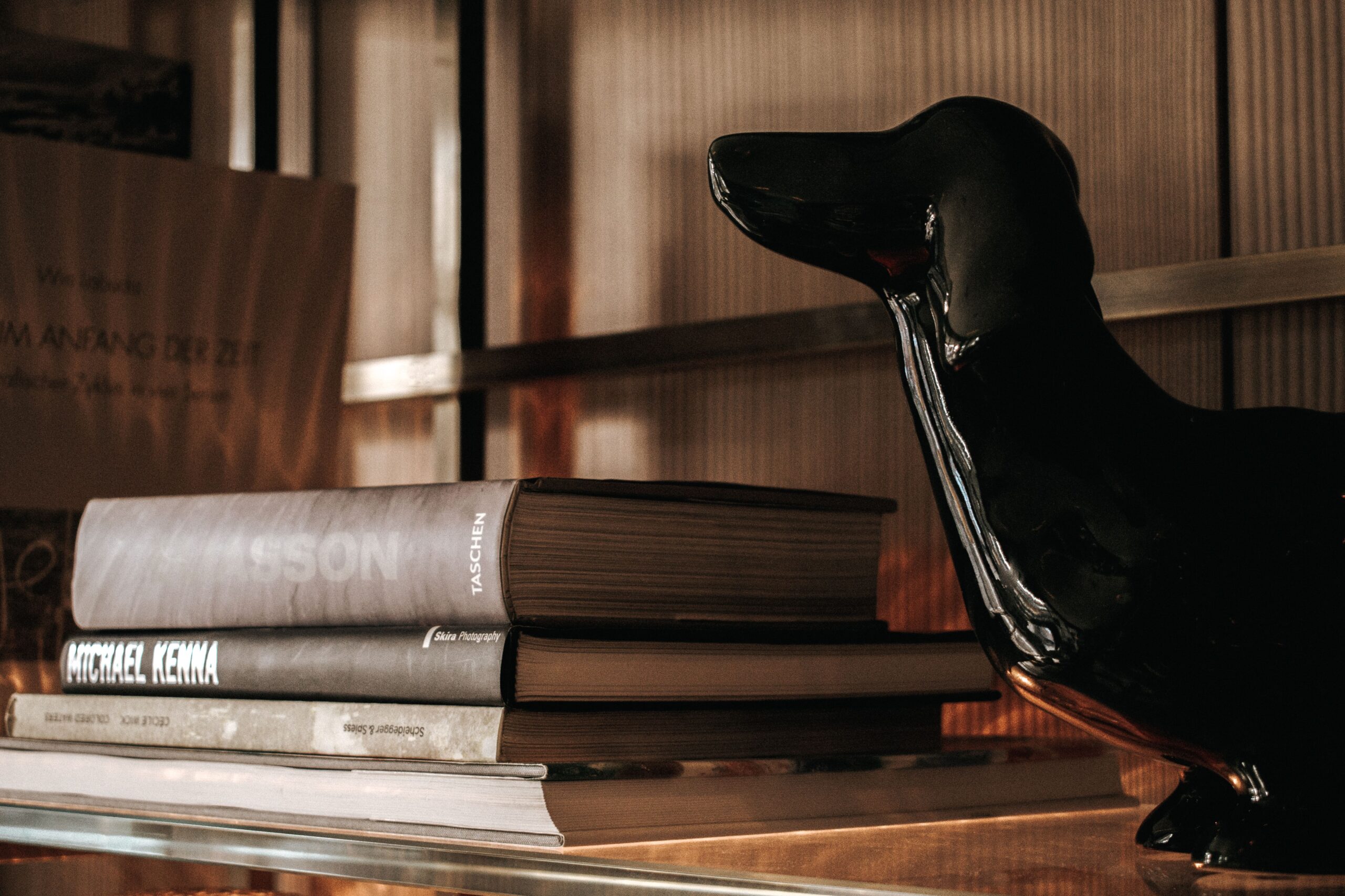
Books are one of the best tools for styling because they create platforms, color blocks and structure. Stack two under a small object to give it importance. Turn a large art book flat to break up a row of upright spines. Use one stack to connect objects that would otherwise feel unrelated.
Do not buy decorative books by the yard. The point is that the books are yours. If the colors are chaotic, remove dust jackets, group by tone loosely, or simply turn the loudest spine elsewhere.
The shelf reset: a 10-minute method
Take everything off one shelf — not the whole room.
Return the largest object first.
Add one stack of books or one frame.
Add one smaller, irregular object.
Stop before the shelf feels “done.”
Take a photo from across the room and remove one more thing if needed.
This last step matters. Most styling becomes more convincing one object before you think it is finished.
What makes curated clutter look expensive
Scale, patina and restraint. Larger objects usually read as more intentional than many tiny objects. Natural materials — wood, stone, linen, metal, glass — age visually better than high-gloss plastic. And a little wear often helps: a scratched frame or old book can make new objects feel less showroom-perfect.
You do not need antiques, but one genuinely old thing can anchor an entire group. This is exactly why the current return to nostalgic, throwback interiors feels fresh rather than dated: we are mixing old references with cleaner contemporary rooms.
The fastest test: can you clean around it?
If styling makes the room impossible to dust, use or reset, it is too complicated. A beautiful home should survive contact with Tuesday morning. Keep collections liftable, trays movable and the practical zones — the place you set down a glass, charge your phone or open the mail — available.
That is the real appeal of curated clutter. It lets a room become more expressive without becoming less functional. The goal is not to live in a still life; it is to make ordinary life look good around the edges.