


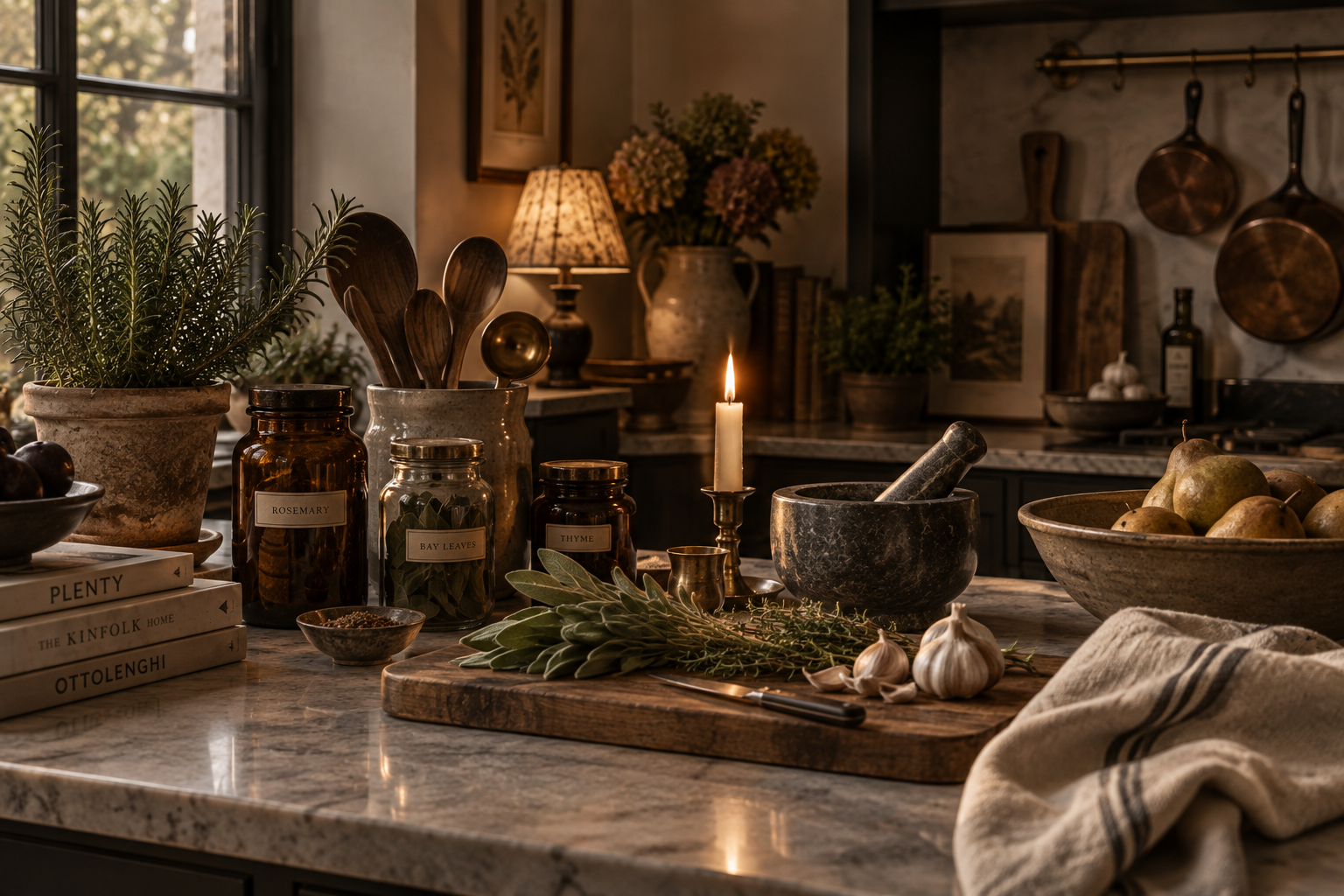
A little apothecary, a little country house, zero novelty potion bottles.
“Kitchen witch” can sound like a theme, and themes are exactly where this look can go wrong. The beautiful version is not about filling your countertops with tiny broomsticks. It is about a kitchen that feels useful, sensory and slightly mysterious: dark wood, glass jars, bundles of herbs, candlelight, old metal, good tea, a little ritual.
Done well, the aesthetic has more in common with an old European apothecary or a very good country-house kitchen than Halloween décor. The secret is restraint. Keep the practical bones of the trend and remove the costume.
Start with ingredients, not decorations
The easiest way to make this aesthetic feel grown-up is to style with things a kitchen could plausibly use. Dried bay leaves, rosemary, tea, salt, peppercorns, olive oil, garlic, lemons and beautiful jars all belong. Plastic potion bottles do not.
A shallow bowl of lemons looks better than a themed sign because it has color, scent and purpose. A jar of loose tea is more convincing than a novelty “witches brew” label. The room should feel as if someone actually cooks there.
Build a quiet apothecary shelf
Choose one small shelf or 18-inch section of counter and treat it as a working apothecary. Decant only the ingredients you use often enough to justify it. Mix clear glass with one or two amber jars, add a stoneware salt cellar, and keep labels simple.
The elegant version has repetition: three similar jars look intentional; twelve unrelated containers look like a prop department. If you want a vintage note, add one old spoon, tiny brass frame or worn wooden board — one is enough.
Add herbs in a way that feels alive
Fresh herbs are the easiest bridge between “witchy” and genuinely beautiful. A pot of rosemary, thyme or sage on the windowsill gives the kitchen an immediate old-world quality. If your kitchen gets little light, use cut herbs in a glass or hang a very small bundle to dry.
Avoid hanging ten bundles from the ceiling unless you are truly drying ten bundles. One or two looks poetic. Ten looks like set design.
Use dark notes, not a dark room
You do not need black cabinets. In fact, the most livable version of the trend works beautifully in white, cream and oak kitchens. Add mood with small dark notes: a walnut board, a blackened metal candlestick, oxblood linen, a deep olive tray or a brown glass bottle.
The contrast is what makes pale kitchens feel richer. Think espresso, tobacco, moss and plum rather than “spooky.”
Let the lighting do half the work
A small counter lamp may be the single best purchase for this look. It lowers the visual center of gravity and makes even a basic kitchen feel intimate after dark. Look for a compact ceramic, pleated-shade or brass lamp that can live safely away from water and heat.
Then add candlelight sparingly. One taper in an old brass holder beside a bowl of pears is atmospheric; six candles around the sink is a fire hazard and a personality test.
The refined kitchen-witch look should feel like a room with rituals — not a room decorated around the word “ritual.”
Choose tools that are beautiful enough to leave out
A mortar and pestle, a wooden pepper mill, linen towels, a small butter dish and a pair of kitchen scissors can carry the aesthetic without trying. This is where the look overlaps beautifully with The Fine Ordinary: ordinary objects, chosen well, become the decoration.
If you are shopping, prioritize one durable object over a handful of trinkets. Marble, stoneware, solid wood and metal age better and photograph better too.
Create one tiny ritual
A trend becomes a lifestyle when it changes what you do. Make tea from loose leaves on Sunday night. Keep a jar of dried orange slices for cocktails and hot water. Mix a simple herb salt. Light the counter lamp before dinner instead of after.
These tiny rituals give the room a reason to look the way it does. They also make the aesthetic last beyond October.
What to skip if you want it to feel expensive
- Novelty labels, fake potion bottles and obvious Halloween signage.
- Too many crystals or mystical symbols in one vignette.
- Black-everything styling that flattens the room.
- Open shelves crowded edge to edge.
- Artificial greenery when real herbs are practical and inexpensive.
- Buying “witchy” decor instead of styling beautiful kitchen objects you already own.
The final test is simple: if you removed the word “witch” from the moodboard, would the kitchen still look beautiful? If the answer is yes, you have the good version — moody, useful, a little enchanted and entirely livable.