

It usually has less to do with what you wear than how you wear it.
I love clothes. I love beautiful things, designer pieces and getting dressed properly. But the more attention I pay to fashion, the less I believe that elegance has much to do with price — or with following a particular set of rules.
You can spend thousands on an outfit and still get the proportions wrong. You can wear jeans and a white shirt and look incredibly put together. And I definitely don’t believe in those lists of things “elegant women would never wear.” A crop top can be elegant. So can a mini skirt, an oversized blazer, a logo or a very trendy pair of shoes. Most of the time, it isn’t the piece that makes the difference.
It’s what you do with it.
01. The Silhouette
DO: Keep a good line
DON’T: Interrupt it for no reason
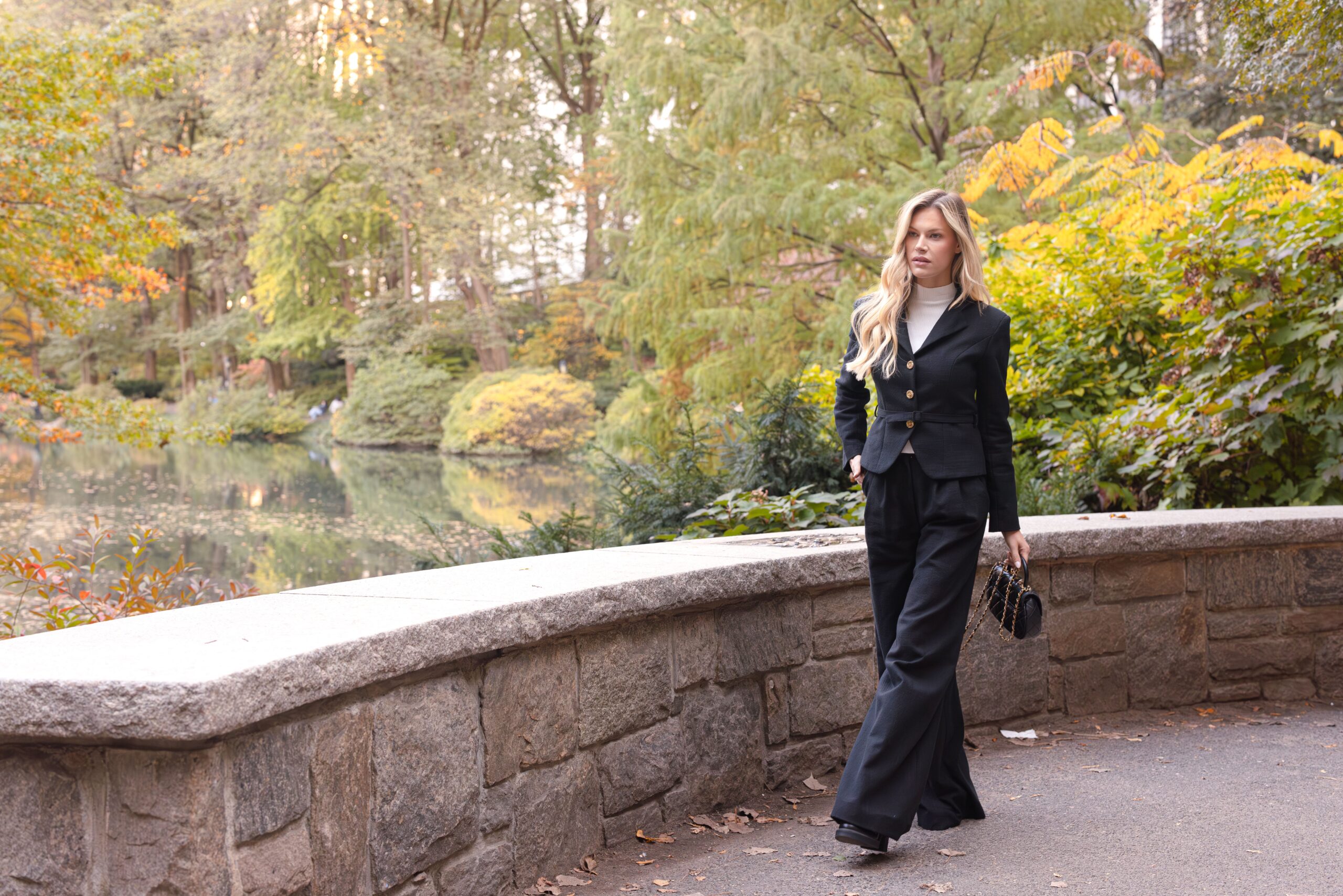
Take a pair of high-waisted tailored trousers and a beautifully cut blazer. Together, they create a long, clean silhouette. Add a simple top that meets the waistband and that line continues. Put a very short crop top between them and suddenly there is a horizontal break right through the middle. That doesn’t make crop tops bad. With a different outfit, I love them. But when an outfit already has a beautiful line, I don’t see much reason to interrupt it.
Sometimes elegance is simply about knowing when not to interfere with something that already works.
02. Trouser Length
DO: Get the length right
DON’T: Pretend a few centimeters don’t matter
They do.
Trouser length is one of those tiny details that can change an entire outfit. Wide-leg trousers designed to skim the shoe can look beautifully elongated at the right length — and strangely awkward when they finish just a little too high. The opposite is true for trousers intentionally designed to be cropped. There isn’t one correct trouser length.
There is, however, a length that makes sense for the cut you’re wearing.
03. Oversized Proportions
DO: Wear oversized intentionally
DON’T: Confuse oversized with too big
I love an oversized blazer. I also love wide trousers and oversized shirts. What I don’t love is the idea that making everything bigger automatically makes an outfit look effortless. Good oversized clothing still has proportion. Maybe the blazer is large, but the trousers give it structure. Maybe both are oversized, but the waist, sleeve length or shoe brings the silhouette back into balance.
The best oversized outfits look deliberate, not accidental.
04. The Focal Point
DO: Let something be the star
DON’T: Make every piece compete for attention
A great statement bag can make an outfit. So can an unusual shoe, beautiful jewelry or a dramatic coat. But they don’t all need to make the outfit at the same time. This doesn’t mean everything else has to be boring. It just means there should be some hierarchy — somewhere for the eye to land.
A statement works better when you actually let it make the statement.
05. Showing Skin
DO: Show skin with intention
DON’T: Assume elegance means covering up
This is one fashion rule I particularly dislike. A completely backless black dress can be incredibly elegant. So can a mini dress, a deep neckline or a crop top.
The question, for me, is balance.
If the back is the focus, maybe the rest of the dress is beautifully simple. If I’m wearing a mini, I might choose something cleaner on top. Not because women need to cover themselves to look elegant.
Showing skin can be beautiful. It just looks better when it feels intentional.
06. Designer Pieces
DO: Wear the designer piece
DON’T: Make your outfit prove how much it cost
I like designer fashion. I own designer pieces. I’m certainly not going to pretend that the only tasteful handbag is one nobody can recognize. Sometimes the recognizable piece is beautiful. That’s why you bought it. But there is a difference between wearing a designer piece because you love the design and building an outfit around proving that everything you own is expensive. A beautiful bag can sit perfectly happily next to jeans and a white shirt. It doesn’t need a logo belt, logo T-shirt, logo scarf and recognizable shoes to confirm its credentials.
Luxury doesn’t become more luxurious when every piece announces itself.
07. Trends
DO: Borrow from trends
DON’T: Become the trend
I’m not anti-trend. Fashion should change. That’s part of what makes it fun.
If suede is everywhere and I find a beautiful suede jacket, I’ll happily wear it. The same goes for a new shoe shape, color or trouser silhouette. What I try not to do is buy the entire aesthetic. When the jacket, jeans, belt, bag, shoes and jewelry all belong unmistakably to the same fashion moment, the outfit comes with a timestamp. Take the parts you genuinely like and wear them with things you already loved before the trend arrived.
The fastest way to date an outfit is to wear the whole trend at once.
08. Personal Taste
DO: Decide what you actually like
DON’T: Let repetition decide for you
This might be the one I care about most.
We see so much fashion now that repetition can start to feel like taste. You see the same shoe on Pinterest. Then on Instagram. Then on five people you follow. Eventually you start wondering whether you need it too. Sometimes you genuinely do love it. But I think it’s worth asking yourself one question:
Would I still think this was beautiful if I hadn’t seen it everywhere?
For me, that is ultimately what timeless style comes down to.
Not dressing as though fashion stopped fifty years ago. Not avoiding trends. And definitely not following some imaginary rulebook for looking “classy.” It’s knowing what you find beautiful — and being selective about what gets to change your mind. Fashion is very good at telling us what is new.
It doesn’t get the final say on what is beautiful.
Beautiful things, sensible thoughts.