


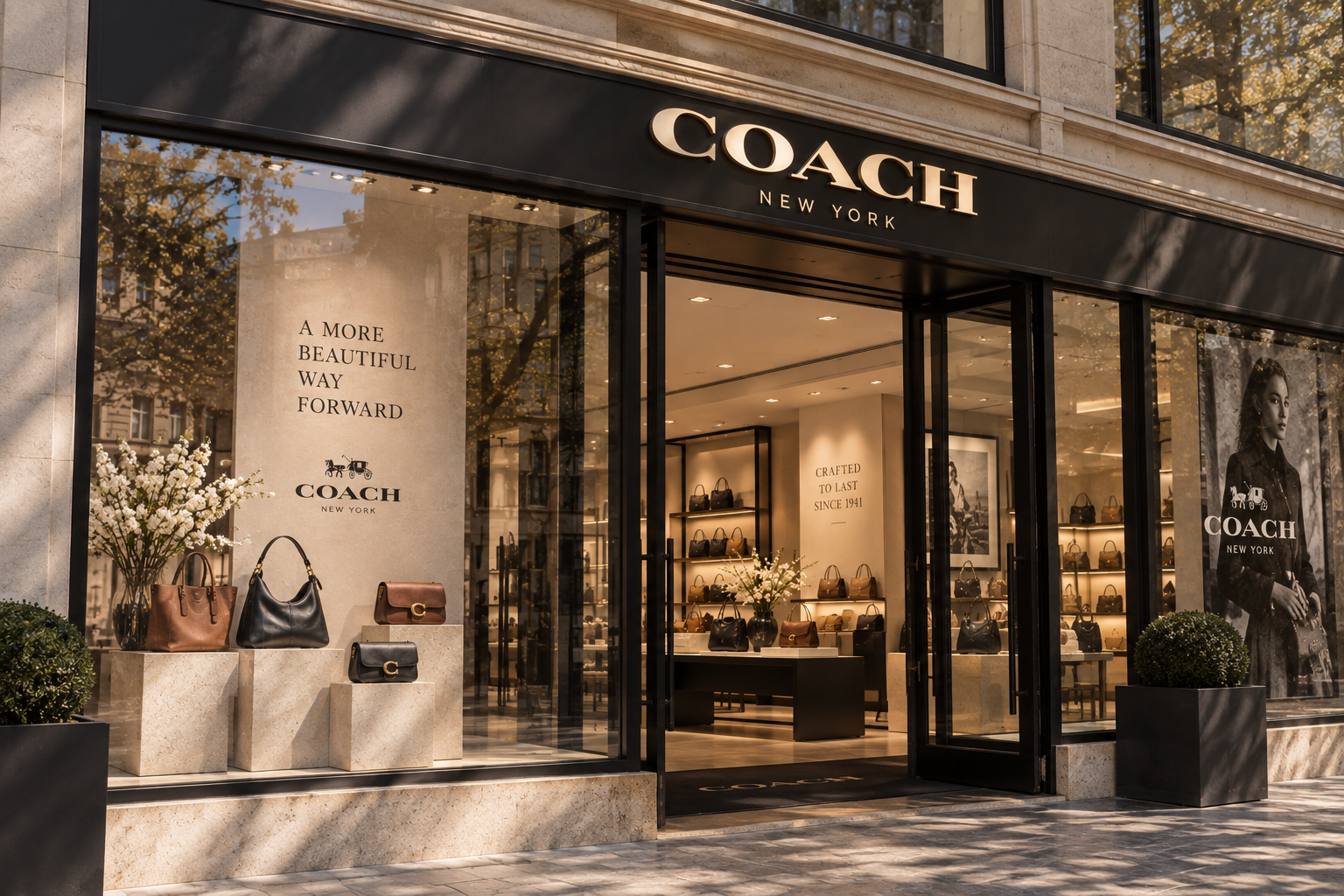
The very smart reinvention of an American fashion icon.
There was a period when carrying a Coach bag didn’t exactly feel like a fashion statement. The brand was still successful and recognizable, but somewhere between the logo-covered bags, outlet stores and constant availability, Coach had become almost too familiar.
Today, the picture looks very different. The Tabby became an It-bag, the Brooklyn found a new generation of fans, vintage Coach is everywhere again, and younger shoppers are actively seeking out the brand. So how does a company founded in 1941 become cool again?
Interestingly, not by pretending to be something new.
01. Coach had something worth bringing back
Coach started in New York in 1941 as a small leather-goods workshop, building its identity around practical, well-designed leather products. In the 1960s, designer Bonnie Cashin introduced color, unusual proportions and details including the now-recognizable turnlock hardware. Coach didn’t need to invent a heritage story decades later.
It actually had one.
The problem was that, eventually, almost everyone knew it.
02. Coach became too familiar
For years, Coach occupied a clever position: more special than a typical mall brand, but far more attainable than the major European luxury houses. Then came rapid expansion, outlets, discounts and an abundance of logos.
Coach was everywhere.
And in fashion, being easy to buy and being desirable aren’t always the same thing. The product hadn’t necessarily become bad. The brand had simply stopped feeling particularly exciting.
03. The comeback looked backwards
When Stuart Vevers became creative director in 2013, Coach gradually began rediscovering what had made it interesting in the first place. Leather. New York. Americana. Recognizable hardware. The archive. The Tabby is probably the clearest example.
Introduced in 2019 and inspired by a Coach design from the 1970s, it became one of the defining products of the brand’s revival. Later versions brought it to an entirely new generation. There’s something refreshingly simple about that. Good design can become unfashionable for a while without becoming bad design.
04. Why did Coach make it back?
This is particularly interesting when compared with brands such as Michael Kors or Guess. All became extremely recognizable and widely available. But Coach has managed to regain a level of fashion desirability that not every brand in that space has recreated.
Personally, I think the product matters too.
I own Coach pieces myself, and I genuinely like them. They’ve held up well, the quality has been good, and I’ve never felt that the actual product was the problem. I can’t say I’ve had quite the same impression of every brand in this category. That doesn’t make every Coach piece excellent or every competitor poor. But Coach had something credible to rebuild around: good leather goods, recognizable design and a real archive.
Sometimes the best reinvention is a good edit
Coach didn’t need to become Hermès. It didn’t need an entirely new identity either. The leather stayed. The American identity stayed. The recognizable details stayed. What changed was which parts of the brand were allowed to take center stage again. And perhaps that’s the real lesson in the Coach comeback.
It didn’t become cool again by becoming a different brand. It became cool again by remembering what was worth keeping — and changing what wasn’t.
Beautiful things, sensible thoughts.